That Pantry Staple Might Be Lying to You: The Truth About Ingredient Freshness
Here's a scenario that probably sounds familiar. You pull out a recipe, gather everything you need, spend an hour mixing and prepping, slide your cake into the oven — and it comes out flat, dense, or just off. You followed the recipe perfectly. You've made it before. So what went wrong?
Nine times out of ten, the culprit isn't your technique. It's something sitting quietly on your shelf, technically within its "best by" window, but functionally past its prime. Manufacturers date their products for legal and logistical reasons, not necessarily to tell you when your baking will start to suffer. Those two things are not the same.
Let's get into it.
How "Best By" Dates Actually Work
Food manufacturers aren't required by federal law to put expiration dates on most products — with the exception of infant formula. The dates you see on your baking ingredients are largely voluntary, and they're set based on quality thresholds the manufacturer defines internally. That means one brand's "best by" might reflect peak flavor, while another's reflects when the product becomes genuinely ineffective.
For baking, the distinction matters enormously. A stale cracker is a minor disappointment. A dead leavening agent is a ruined cake. The printed date gives you a rough ballpark, but it doesn't account for how your ingredients have been stored, how many times the container's been opened, or whether they sat in a warm shipping warehouse before hitting your grocery store shelf.
In other words, your ingredients might already be older than you think before you even bring them home.
The Ingredients That Go Bad Fastest
Baking powder and baking soda are the biggest culprits in failed batches. Baking powder starts losing its leavening strength the moment moisture gets into the container — and in most American kitchens, that's happening constantly. The general guidance is to replace baking powder every 6 to 12 months, but if you store it near the stove or in a humid kitchen, that window shrinks considerably.
The quick test: Drop a teaspoon into hot water. If it bubbles vigorously, you're good. A weak fizz or no reaction at all means it's time for a new can.
Baking soda lasts longer — up to two years if sealed — but it absorbs odors and loses potency over time too. Test it by dropping a small amount into white vinegar. Strong fizzing means it still has life. A sluggish reaction means it's coasting on reputation.
Yeast is another one that home bakers tend to underestimate. Packets of active dry or instant yeast have a printed expiration date, but yeast is a living organism and it doesn't always read the calendar. Heat, humidity, and even light exposure can kill it prematurely. Always proof your yeast before committing it to a dough — dissolve it in warm water (around 110°F) with a pinch of sugar. If it's foamy and active within 10 minutes, it's alive. If nothing happens, don't use it.
Whole wheat flour and other whole grain flours go rancid much faster than all-purpose flour because they retain the bran and germ, which contain natural oils. Those oils oxidize. At room temperature, whole wheat flour can start turning rancid in as little as one to three months. If your flour smells musty, sour, or faintly like crayons, that's oxidation — and baking with it will pass that off-flavor straight into your finished product.
Spices deserve their own mention. Ground cinnamon, nutmeg, ginger, and cardamom are baking staples, but most ground spices lose meaningful potency within six to twelve months of being opened. They won't make you sick, but they will make your snickerdoodles taste like nothing. Smell the jar before you use it. If the aroma is faint or flat, the flavor will be too.
The Ingredients That Hold Up Better Than You'd Expect
Not everything in your pantry is racing toward irrelevance. All-purpose white flour, stored in an airtight container in a cool, dry spot, can last up to a year or even longer without significant quality loss. The lack of oils in refined flour is actually a storage advantage.
Granulated sugar is essentially shelf-stable indefinitely if kept dry and sealed. Same goes for salt and pure vanilla extract — the alcohol in vanilla acts as a preservative, making it one of the most durable things in your baking cabinet.
Honey doesn't expire in any meaningful sense. Archaeologists have found edible honey in ancient Egyptian tombs. If yours has crystallized, just warm it gently in a water bath and it'll return to normal.
Storage Is Where Most of Us Go Wrong
Even ingredients with generous shelf lives can degrade quickly if they're stored carelessly. The three enemies of pantry staples are heat, moisture, and light — and most American kitchens have all three in abundance near the stove.
A few practical adjustments make a real difference:
- Move your leaveners away from the stove. A cabinet on the opposite side of the kitchen, or even a dedicated cool drawer, extends their effective life significantly.
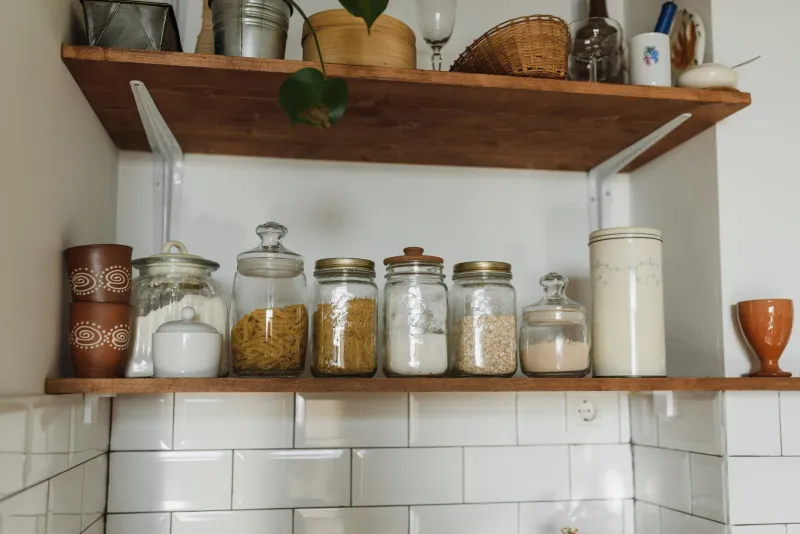
- Decant into airtight containers. Paper bags and cardboard boxes breathe. Once you open a bag of flour or a box of baking soda, transferring it to a sealed glass or hard plastic container dramatically slows degradation.
- Refrigerate or freeze whole grain flours. This is the single best thing you can do to extend their life. Bring them to room temperature before baking so they don't affect your dough temperature.
- Date your containers. This sounds obvious, but most of us don't do it. A piece of masking tape with the purchase date takes five seconds and saves you from the guessing game six months later.
A Simple Pantry Audit Worth Doing Right Now
If you haven't thought critically about your baking shelf in a while, set aside twenty minutes and do a quick pass. Pull everything out, check dates, and run the simple tests for your leaveners. Smell your spices. Look at your flour — if it has any off smell or visible clumping beyond normal, it's done.
Yes, you might end up throwing some things out. That's a little frustrating. But consider the alternative: spending hours on a recipe that never had a chance because your baking powder quietly gave up three months ago.
At Bill Baker's, we talk a lot about technique and recipes, but the foundation of every great bake is ingredient integrity. No amount of skill compensates for chemistry that isn't working. Fresh, properly stored ingredients aren't a premium — they're the baseline. And now you've got the tools to actually know what you're working with.

