Beautiful Layers, Empty Promise: What's Really Going Wrong Inside Your Croissants
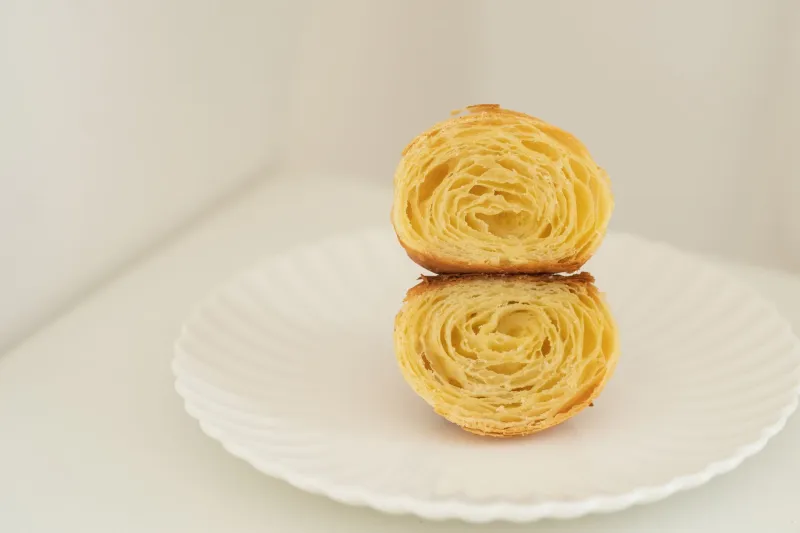
There's a particular kind of heartbreak that hits when you pull a tray of croissants from the oven and they look perfect. Golden, deeply caramelized, with visible layers curling at the cut ends. You let them cool, you take that first bite — and nothing. The outside shatters like it's supposed to, but the inside is dense, gummy, or weirdly bready. No honeycomb. No pull-apart drama. Just... dough.
If that sounds familiar, you're not alone. Croissants are one of the most commonly attempted and most commonly misunderstood projects in home baking. And here's the thing: a croissant can fail on the inside while succeeding completely on the outside. That's what makes troubleshooting so tricky. You don't know there's a problem until you've already bitten into it.
The root cause almost always lives in the lamination — the process of folding cold butter into dough repeatedly to create hundreds of alternating layers. Get it right, and steam from that butter puffs those layers apart during baking, creating the open, airy crumb that makes a croissant worth the effort. Get it even slightly wrong, and those layers merge, seal, or collapse before the oven ever gets a chance to work its magic.
Let's break down exactly where things go sideways.
The Butter Temperature Problem (It Goes Both Ways)
Most home bakers know that warm butter is bad for croissants. It melts into the dough instead of staying as a distinct layer, which destroys the whole point of lamination. So they overcorrect — they work with butter straight from the fridge, cold and rigid.
Here's the issue: butter that's too cold doesn't bend, it shatters. When you roll over a stiff butter block, it cracks and breaks into jagged chunks rather than spreading in a smooth, even sheet. Those shards puncture your dough layers, creating gaps and weak spots that collapse under heat instead of puffing up.
The target is what pastry folks call "plastic" butter — pliable enough to bend without cracking, but firm enough that it holds its shape when you press a finger into it. In most American home kitchens, that's somewhere around 60°F to 65°F. If your kitchen runs warm, you'll be fighting a constant battle. A quick chill of the whole dough-and-butter package between folds isn't optional — it's the job.
A simple test: take your butter block and try to bend it. If it snaps, it's too cold. If it squishes and smears, it's too warm. If it bends without cracking, you're ready to roll.
Rest Periods Aren't Optional Rest Periods
This is where patience gets expensive. The recipe says to refrigerate the dough for 30 minutes between folds, and a lot of home bakers treat that as a suggestion rather than a structural requirement.
Here's why those rests matter so much: every time you fold and roll the dough, you're developing gluten and generating heat from friction. The gluten gets tight and starts resisting the rolling pin — you can actually feel it snapping back. If you keep rolling through that resistance, you're tearing the delicate layers you just created and compressing butter into the dough rather than keeping it separate.
The rest period lets gluten relax so the dough becomes workable again. It also allows the butter to firm back up after the warmth of your hands and rolling pin have softened it. Skip the rest, and you're essentially ironing your layers flat. They'll look intact on the outside but they've already fused together where it counts.
Thirty minutes in the fridge between each fold is the minimum. An hour is better. Overnight rests after the final fold before shaping? That's not laziness — that's strategy.
The Fold Sequence and the Pressure You're Using
Most croissant recipes call for a series of letter folds (also called three-folds or turns) — you fold the dough in thirds like a business letter, rotate it 90 degrees, and repeat. The typical sequence is three to four of these folds, which theoretically creates 27 to 81 distinct butter layers.
The mistake isn't usually in counting the folds wrong. It's in how aggressively people roll between them.
Pressing down hard on the rolling pin forces the dough layers to compress and the butter to smear sideways rather than staying in clean, separate sheets. You want to use length to thin the dough, not pressure. Roll from the center outward with a gentle, even hand. If you're leaning your body weight into the pin, you're doing too much.
Also worth noting: more folds is not always better. Some bakers think adding an extra fold will create more layers and a flakier result. What it actually does is make the individual layers so thin that they fuse together during baking rather than puffing apart. Stick to the sequence your recipe calls for.
Shaping: The Final Place Everything Can Go Wrong
Even if your lamination is technically perfect, improper shaping can undo it. When you cut your triangles and roll them into the classic crescent shape, you need a light touch. Rolling too tightly compresses the layers from the outside in, sealing the interior before it ever hits the oven. Rolling too loosely means the croissant unravels and the layers separate unevenly.
The goal is a firm but not aggressive roll — snug enough to hold its shape through proofing and baking, but not so tight that you've squeezed the air out before steam has a chance to do its job.
Also: make sure your croissants are actually proofed before baking. An underproofed croissant will have a dense crumb no matter how good the lamination was. They should look noticeably puffy, jiggle slightly when you shake the pan, and have visible layer definition at the cut ends. That usually takes two to four hours at room temperature, depending on how warm your kitchen is.
A Quick Lamination Checklist for Home Bakers
Before you start your next batch, run through this:
- Butter temp: Pliable and bendable, not cracking, not squishing. Aim for 60–65°F.
- Dough temp: Cold throughout. If it's warming up mid-session, stop and refrigerate immediately.
- Rest time: At least 30 minutes between every fold. Don't rush it.
- Rolling pressure: Light and long, not heavy and short. Let the pin glide.
- Fold count: Follow the recipe exactly. More folds doesn't mean better croissants.
- Shaping tension: Firm but gentle. You're coaxing, not forcing.
- Proof time: Don't skip it. Jiggly and puffy means ready.
Croissants are genuinely one of the harder things you can attempt in a home kitchen — not because the techniques are mysterious, but because they demand a level of patience and temperature awareness that most baking projects don't. When yours finally come out right, with that open, airy crumb and those distinct honeycomb pockets, you'll know exactly what all those careful rests and gentle folds were building toward.
And that first real bite? Completely worth it.