It's Okay to Say Goodbye: The Honest Baker's Guide to Retiring a Sourdough Starter
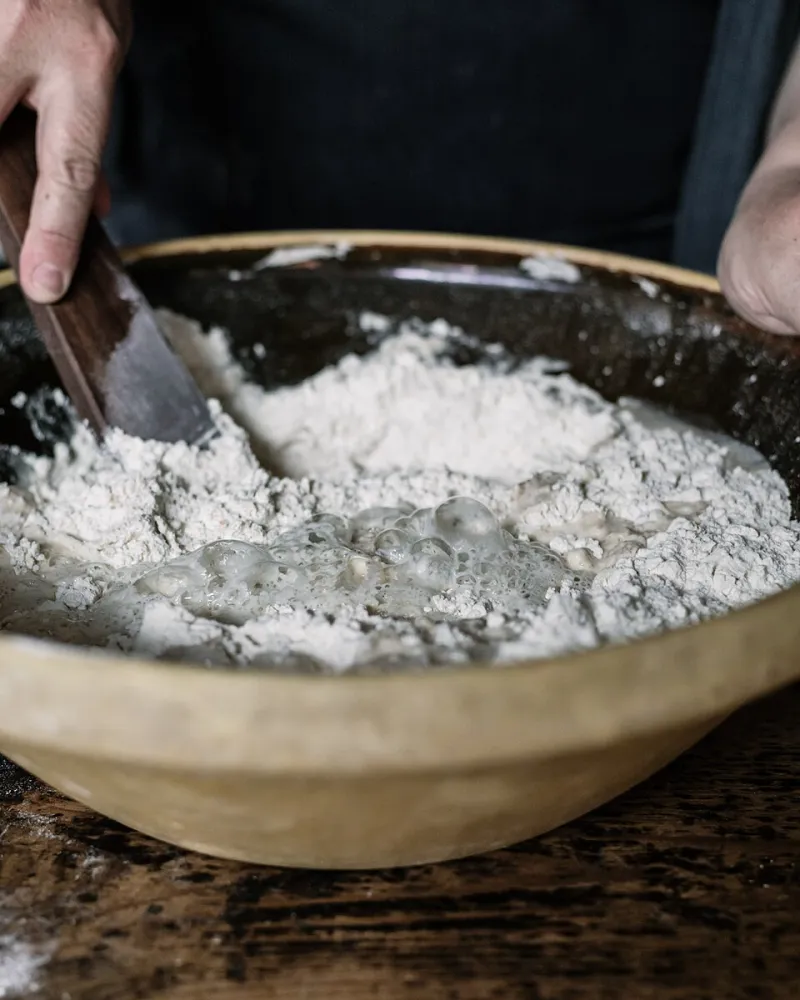
Photo: William George James, CC BY-SA 4.0, via Wikimedia Commons
Somewhere in America right now, there's a mason jar sitting in the back of a refrigerator. It's been there for three weeks. Maybe six. The person who put it there knows it's there. They think about it — usually on Sunday mornings when they meant to bake and didn't. They feel vaguely guilty every time they reach past it for the orange juice.
If that sounds familiar, you're not alone. And more importantly, you're not a bad baker.
Sourdough starters have a way of accumulating emotional weight that far exceeds their biological complexity. They get named. They get inherited. They get treated like pets — or worse, like obligations. And somewhere between the romance of wild fermentation and the reality of your actual schedule, keeping a starter alive can quietly shift from a pleasure into a chore you can't quite bring yourself to quit.
This is a conversation about that shift. And about what you can do when you finally decide you're done.
Why We Hold On (Even When We Shouldn't)
There's a particular kind of guilt that comes with sourdough maintenance, and it's weirdly specific to the baking world. You don't feel this way about an unused ice cream maker. You don't lie awake thinking about the spiralizer in the cabinet. But a starter? That's different.
Part of it is the living-thing factor. A starter is, technically, alive — a colony of wild yeast and bacteria you've been sustaining with flour and water. Letting it die feels like a small act of neglect, even though it's scientifically just a jar of fermented paste.
Another part is the mythology. Sourdough culture — pun intended — has built up enormous lore around starters that have been passed down through generations, maintained for decades, supposedly originating in gold rush-era San Francisco or a great-grandmother's farmhouse kitchen. When your starter comes with a story attached, retiring it can feel like erasing history.
And then there's the sunk cost. You've fed this thing hundreds of times. You've read about it, worried about it, nursed it back from the dead at least once. Walking away feels like admitting defeat.
None of these are good reasons to keep something that's making you miserable.
The Honest Questions to Ask Yourself
Before you decide anything, it helps to get clear on what's actually going on. Ask yourself a few things:
When did you last bake with it? Not feed it — actually use it. If you can't remember, that's data.
Do you want to bake sourdough, or do you feel like you should? There's a meaningful difference. Baking out of genuine interest produces bread. Baking out of obligation produces stress and mediocre loaves.
Is the maintenance fitting your life, or are you contorting your life around the maintenance? A starter that works for a retired baker with a predictable schedule might be completely incompatible with a full-time working parent of three.
Are you keeping it for you, or for someone else's approval? This one's uncomfortable but worth sitting with. Sometimes we maintain starters because we posted about them on Instagram once, or because a friend gifted it to us and we don't want to seem ungrateful.
There are no wrong answers here. The point is just to be honest with yourself about the actual reason the jar is still in your fridge.
What Retiring a Starter Actually Looks Like
Let's be practical for a minute. If you've decided — or you're strongly leaning toward — stepping back from sourdough, you have a few options.
Gift it forward. If your starter is genuinely healthy and active, there's likely a baker in your life who would love to have it. Local baking groups on Facebook, neighborhood apps like Nextdoor, or even a quick post in a community forum can connect your starter with someone who'll actually use it. This is probably the most satisfying exit — the culture continues, just not in your kitchen.
Dry it and archive it. If the starter has sentimental value — say, it came from a family member or a specific place you care about — you can dehydrate it and store it almost indefinitely. Spread a thin layer on parchment, let it dry completely at room temperature, then crumble it into flakes and seal it in an airtight bag. Label it with a date and origin note. It's not gone; it's just resting. You can rehydrate it years from now if the urge returns.
Let it go, cleanly. Sometimes the right move is to compost it and be done. There's no ceremony required. You don't owe a sourdough starter a eulogy. If it's been neglected long enough that it's more hooch and sad gray liquid than active culture, it's probably not worth reviving anyway. Pour it out, wash the jar, move on.
A Note on Starters That Were Gifted to You
This deserves its own section because the social dynamics here are real. If someone gave you a starter — especially if they made a big deal about its lineage or their own attachment to it — you might feel like retiring it is some kind of betrayal.
It isn't. When someone gifts a starter, the intention is to share something they love. The hope is that it brings you joy too. If it hasn't, that's not a moral failing on your part. You can be honest with the person who gave it to you, or you can simply move on without a detailed explanation. Either is fine.
If the guilt is really weighing on you, consider offering to pass it to someone else who bakes. That way the culture lives on, and you can truthfully say it's in good hands.
When You Might Actually Want to Come Back
Retiring a starter doesn't have to be permanent. Life changes. Schedules open up. Sourdough obsessions can reignite after years of dormancy. If you've dried and archived your culture, you've left yourself a door back in. And if you didn't — well, building a new starter from scratch takes about two weeks and a few tablespoons of flour a day. It's genuinely not that hard.
The baking world has a tendency to treat sourdough like a sacred commitment, but it's really just a tool. A delicious, fascinating, sometimes maddening tool. Tools should serve you, not the other way around.
The Bigger Point
Baking is supposed to be something you come back to because you want to — because the process feeds something in you, because the smell of a loaf coming out of the oven still gets you, because sharing a good bread with someone you care about feels like an act of love. That's the whole spirit of it.
When any part of your baking practice starts to feel like a burden you're just managing, that's worth paying attention to. A starter you dread feeding isn't making you a better baker. It's just making you feel bad.
Let it go. Bake something you actually love. Come back to sourdough when — if — it calls you again.
The flour will still be there.