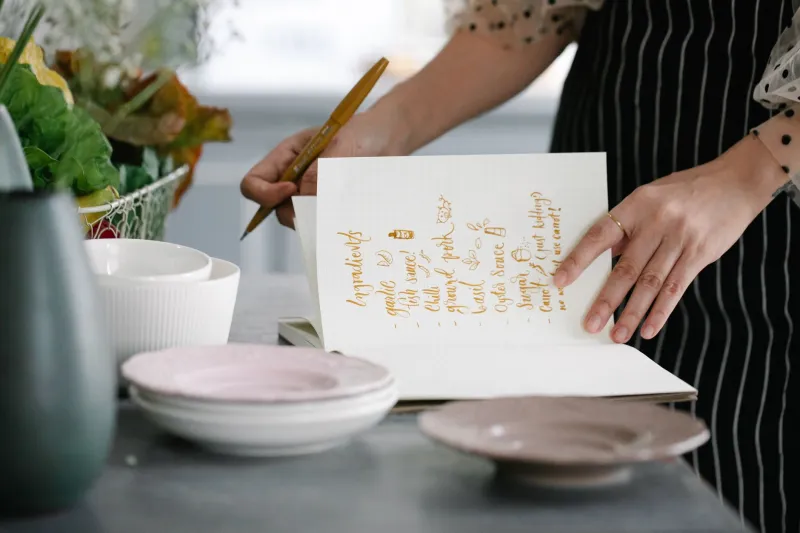
Keeping the Soul, Updating the Recipe: A Baker's Guide to Modernizing Family Heirlooms
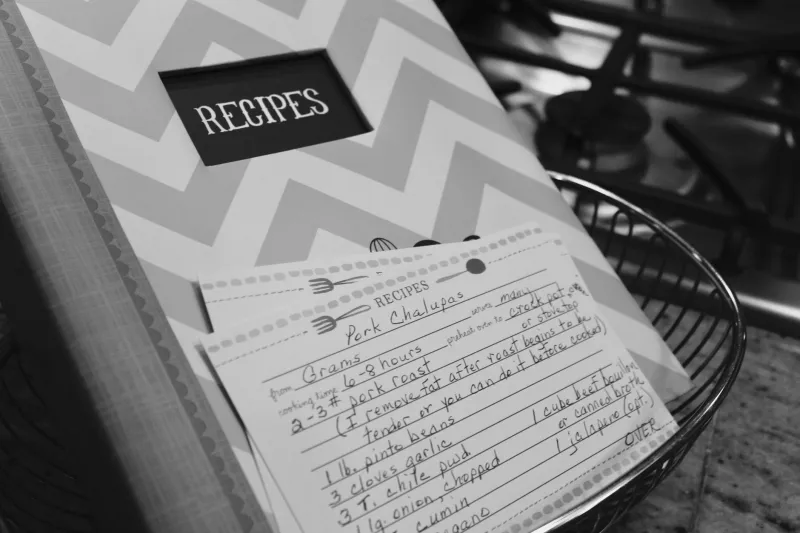
There's a particular kind of pressure that comes with pulling out a recipe written in your grandmother's handwriting. The card is soft at the corners, maybe stained with vanilla extract or dusted with what you hope is flour. The instructions assume you already know things — bake until done, enough butter to coat the pan, a handful of walnuts. And somehow, every time she made it, it was perfect.
Now it's yours. And you want to make it work in your kitchen, with your oven, in the year you actually live in. But you also don't want to strip it of everything that made it hers.
This is the baking inheritance dilemma, and almost every home baker faces it eventually.
Why Old Recipes Don't Always Behave
Before you start tweaking anything, it helps to understand why a beloved family recipe might not perform the way you remember. Ingredients have changed more than most people realize. All-purpose flour milled today tends to have a slightly different protein content than what your great-aunt was buying at the A&P in 1962. Butter fat percentages have shifted. Baking powder formulations have evolved. Even vanilla extract — if she was using imitation, that flavor profile is genuinely different from pure extract, and not always in the way you'd expect.
Equipment matters just as much. A recipe developed in a gas oven with unpredictable hot spots will behave differently in a modern convection oven that circulates heat evenly. Hand mixers have changed. Stand mixers are more powerful. Even something as simple as a glass baking dish versus a metal one can throw off your timing by ten minutes or more.
None of this means the recipe is broken. It means the recipe was written for a specific context that no longer fully exists — and your job is to translate it, not replace it.
The Decision Framework: What Gets to Change?
Not every element of an old recipe carries equal weight. Some things are load-bearing walls. Others are just paint colors. Here's a useful way to think about it:
Structural elements — ratios of flour to fat to liquid, leavening amounts, egg counts — these are the architecture. Change them carefully and only when you have a clear reason. If the cake is consistently sinking in the middle, yes, you might need to look at your baking powder ratio. But don't adjust structure just because a recipe feels old-fashioned on paper.
Flavor elements — the specific extracts, spices, citrus zests, or liquors that define the taste — these are often where the soul lives. Your grandfather's rum cake probably tastes the way it does because of the particular combination of nutmeg and dark rum. Swap one out and you've made a different cake. Protect these unless you have a very good reason to change them.
Method elements — the order of operations, mixing techniques, resting times — these are where you often have the most room to modernize without consequence. Creaming butter and sugar by hand for ten minutes is a commitment. Doing it in a stand mixer for three minutes on medium gets you to the same place. That's a fair trade.
Vague instructions — the handfuls and until it looks right moments — these need to be decoded, not deleted. When a recipe says a good-sized pinch of salt, that's an invitation to test and document. Make the recipe as written, measure what you actually use, and write it down. Now you have a working version that preserves the original intent.
Case Study: The Pound Cake Problem
Consider a classic Southern pound cake recipe that calls for a pound each of butter, sugar, eggs, and flour — the traditional formula. It also specifies oleo (margarine) in addition to butter, a common mid-century combination meant to keep the crumb tender.
A baker inheriting this recipe today has a choice. Margarine has largely fallen out of favor, and the modern versions don't behave the same way the hydrogenated shortenings of the 1950s did. Simply swapping in all butter changes the texture — it can make the crumb a little denser, a little richer.
Is that bad? Not necessarily. But it is different. One approach: make the recipe both ways, side by side, and decide which version you want to carry forward. Document the difference. If you choose all butter, note that you made the change and why. The recipe's history doesn't disappear — it just gets a new chapter.
When to Leave the Quirks Alone
Some things in old recipes look like mistakes but are actually the point. A cookie recipe that seems to have too much brown sugar produces an unusually chewy, almost toffee-like texture — and that might be exactly why everyone loved it. A bread recipe that calls for a longer, slower rise than modern recipes recommend might be developing flavor complexity that a quick-rise version simply can't replicate.
Before you correct something, ask yourself: is this a flaw, or is this the feature? If the results are consistently delicious, the answer is probably the latter.
This is especially true of texture. American baking has a long history of regional preferences — dense, moist crumbs in the South; chewier, heartier textures in the Northeast; lighter, airier styles in parts of the Midwest. What looks like an error in ratios might actually be a regional signature.
How to Document as You Go
The biggest mistake bakers make when adapting family recipes is not writing things down. You make a successful batch, you're happy, and then three months later you can't remember whether you used two teaspoons of baking powder or two and a half.
Create a working document alongside the original. Keep the original untouched — even if it's just a photo of the handwritten card. Your working version gets all your notes: what you changed, what you measured, how it turned out, what you'd do differently next time. Over a few iterations, you end up with something valuable: a recipe that honors the original and actually works in your kitchen.
Some bakers even add a brief note about the history — who made it, when they made it, what occasions it was tied to. That context transforms a recipe from a set of instructions into a story.
The Real Goal
Modernizing a family recipe isn't about making it better in some objective sense. It's about making it yours — functional, reliable, and still connected to wherever it came from. The goal isn't a perfect replica of something you ate as a kid. That's probably impossible anyway; memory adds its own seasoning.
What you're really after is a recipe you can make with confidence, share with the people you love, and eventually pass along yourself — with your own notes in the margins, your own adjustments, your own little stains on the card.
That's how a recipe stays alive. Not by staying frozen, but by being baked, again and again, by people who care about where it came from.