Flour, Memory, and the Hard Question: Which Family Recipes Actually Deserve to Survive

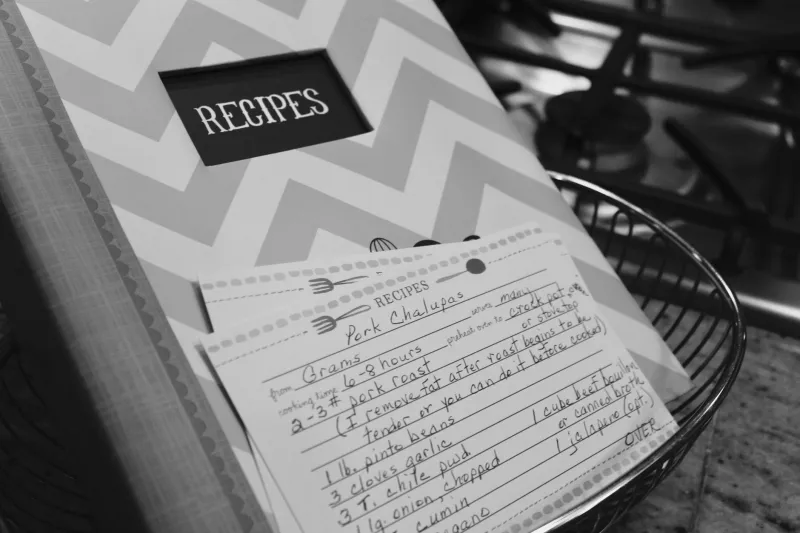
Photo: vintage handwritten recipe cards on wooden table with flour and rolling pin, via i.etsystatic.com
Somewhere in your kitchen — tucked inside a drawer, stuffed into a binder, or living rent-free in your head — there's a recipe you've never made. Maybe it belonged to a grandmother you adored, an aunt who brought it every Thanksgiving, or a great-uncle whose name you barely remember. You haven't baked it. You probably won't. But throwing it away feels like a small act of betrayal.
That tension is real, and it's something almost every home baker navigates at some point. The family recipe box is never just a collection of instructions. It's a compressed archive of people, places, holidays, and feelings. And when someone passes it down to you, they're not just handing over a list of ingredients — they're asking you, in some unspoken way, to keep a piece of them alive.
But here's the thing nobody says out loud: you don't have to keep all of it.
The Weight We Carry Into the Kitchen
American baking culture has a complicated relationship with inheritance. We celebrate the idea of passing recipes down through generations — it's woven into how we talk about food, identity, and belonging. Regional specialties, holiday traditions, church cookbook staples: these feel like they carry something larger than themselves.
And sometimes they do. But sometimes a recipe is just a recipe. Sometimes it was never that good to begin with, or it was good in a specific context — a specific kitchen, a specific oven, a specific occasion — that no longer exists.
The problem is that guilt makes it hard to see clearly. When you're sorting through your mother's handwritten cards, everything feels sacred. You're not just evaluating a buttermilk pound cake. You're evaluating your relationship with the person who made it, which is an entirely different and much harder thing.
So let's separate those two things, because they deserve to be handled differently.
A Framework That Actually Helps
Before you commit to preserving, modernizing, or releasing a recipe, it helps to ask a few honest questions — not about the person who made it, but about the recipe itself and your life right now.
Do you actually want to eat this? Not out of obligation, not to feel connected to someone you miss, but genuinely — would this bring you joy on a regular Tuesday? If the answer is no, that's worth sitting with. A recipe that only gets made out of guilt tends to turn into a resentment you bake into every batch.
Does it work in your kitchen and your life? Some recipes were designed for wood-burning stoves, for families of twelve, for ingredients that don't exist anymore or cost a small fortune today. A molasses cookie that required a specific regional brand of shortening from a company that closed in 1987 isn't a recipe — it's a puzzle with missing pieces. That doesn't mean it's not worth solving, but it does mean the effort needs to match the reward.
Is the memory actually in the recipe, or is it in the eating? This is the one that catches people off guard. Sometimes what you're really preserving isn't the specific formula — it's the feeling of a particular afternoon, a particular person, a particular sense of being taken care of. And sometimes that feeling lives more vividly in a story you write down than in a recipe you attempt and fail to replicate.
Would anyone else in your family actually bake this? Preservation is a communal act. A recipe that lives only with you, that you feel obligated to make but don't enjoy, and that no one else is interested in learning — that recipe has already faded. Keeping it in a binder doesn't change that.
The Middle Path: Preserve the Story, Release the Formula
One of the most freeing realizations you can have as a baker is that preserving a family recipe doesn't always mean continuing to bake it. There are other forms of keeping.
Write down what you remember about it. Where it appeared, who made it, what the kitchen smelled like, whether it was a special occasion or an everyday thing. That context is often more valuable than the recipe itself, and it's also more honest — because the recipe without the context is just a list of instructions, but the story is irreplaceable.
Photograph the original card, even if the handwriting is faded and the measurements are vague. Scan it, file it, share it with family members who might want it. The act of documentation is its own form of respect.
And if you decide a recipe isn't for you but suspect it might matter to someone else in your family, ask around before you let it go entirely. What feels like a burden to you might feel like a treasure to a cousin you haven't talked to in years.
When Keeping a Recipe Means Changing It
Some recipes are worth keeping but need real work before they're livable. Ingredients that need updating, techniques that can be clarified, proportions that need adjustment for modern pans and ovens — these are all fair game.
Modernizing a family recipe isn't disrespectful. It's actually the most practical form of preservation, because a recipe that gets made regularly is far more alive than one that sits untouched out of reverence. Your great-grandmother almost certainly adapted her own mother's recipes to fit her kitchen and her era. You're just doing the same thing.
The key is to document what you changed and why. Keep a version of the original alongside your updated interpretation. That way, the lineage is visible — you can see where it came from and where it went, and someone after you can make their own decisions about what to carry forward.
Letting Go Without Guilt
Some recipes, when you're honest about it, just don't deserve the shelf space. They were never particularly good, or they served a moment that's passed, or they belong to a branch of the family you're not close to and feel no real connection with. Keeping them out of obligation is its own kind of dishonesty.
Releasing a recipe isn't erasing a person. The people who fed you are not contained in their formulas. They exist in your memories, your habits, the way you instinctively add a little more vanilla or always toast the nuts first because someone once showed you that it mattered.
You carry them in the way you bake, not necessarily in every specific thing they baked.
The Recipes Worth Fighting For
After all that sorting and questioning, you'll know which ones are real. The recipes you reach for without thinking, the ones that make people ask you for the card, the ones tied to a tradition your family genuinely wants to continue — those are the ones that deserve your time and energy.
Protect those. Write them down properly. Make them enough times that you know them by feel. Teach them to someone younger if you can.
Because the goal of a baking legacy isn't to preserve everything — it's to pass on the things that still have life in them. And knowing the difference between those two things is one of the most valuable skills a baker can develop.