Flour, Butter, and Meaning: Why Homemade Baked Gifts Hit Different
Photo: Daderot, CC0, via Wikimedia Commons
Walk into any Target or grocery store in December and you'll find towers of cookie tins, shrink-wrapped pound cakes, and ribbon-tied boxes of shortbread. They're fine. They're convenient. And they mean almost nothing.
Now think about the last time someone handed you a loaf of banana bread still warm from the oven, or showed up at your door with a dozen cookies wrapped in parchment and tied with kitchen twine. Different feeling entirely, right? That's not an accident. That's the whole point.
Homemade baked goods carry something that no price tag can replicate — the irreplaceable weight of someone's actual time. And in a world where time is the one thing nobody seems to have enough of, that matters more than ever.
The Currency Nobody Talks About
When you bake something for someone, you're spending resources that can't be bought back. You blocked off a chunk of your afternoon. You measured and mixed and waited. You probably made a special trip to the store for that one ingredient you were out of. You cleaned up the mess. And then you handed the result to another person and said, without words, this is what you're worth to me.
That's the unspoken language of a homemade gift. It's not about the recipe being impressive or the presentation being Instagram-worthy. It's the proof of effort — visible, tangible, edible proof — that someone was on your mind long enough to do all of that.
Store-bought gifts aren't bad. But they don't say the same thing. A $30 candle says "I thought of you at the checkout line." A homemade pecan pie says "I thought of you three days ago when I was planning my week."
Why Baked Goods Specifically
Lots of things take time to make. So why does food — and baked goods in particular — hit so differently?
Part of it is the ephemeral nature of the gift. A baked good won't sit on a shelf gathering dust. It gets consumed. It becomes part of the person you gave it to, literally. There's something almost ancient about that exchange — feeding someone as an act of love is as old as humanity itself, and it's woven deep into American traditions, from church potlucks to holiday cookie swaps to the casserole that shows up at your door after a loss.
Baking also has a visible learning curve. The person receiving your sourdough boule or your layered coffee cake probably knows, at least vaguely, that it took skill and practice to make it turn out right. That implicit acknowledgment of effort adds another layer of meaning to the gift.
And let's be honest — it tastes better. When you know someone made something specifically for you, it genuinely tastes better. That's not just sentiment. Research backs it up. The story behind food changes how we experience it.
Making It Feel Intentional, Not Obligatory
Here's the honest baker's dilemma: sometimes we bake for people because we want to, and sometimes we bake for people because we feel like we have to. The recipient can usually tell the difference — not because of the quality of the bake, but because of the details around it.
Intentionality is what separates a gift from a transaction. A few things that go a long way:
Choose something specific to them. Did your neighbor mention once that her grandmother used to make snickerdoodles? Make snickerdoodles. Does your brother-in-law always reach for the lemon bars at family gatherings? You know what to do. A gift that shows you were actually paying attention to who this person is carries exponentially more weight than a generic batch of chocolate chip cookies — even if those cookies are objectively delicious.
Write something down. A handwritten card, even just a sticky note on the box, transforms the experience. You don't need to write a novel. Even "I made these thinking of you" is enough. It closes the loop between the effort you put in and the message you're sending.
Package it like you mean it. You don't need to spend money on fancy packaging. A clean sheet of parchment paper, a piece of baker's twine, and a simple kraft paper bag do the job beautifully. The goal isn't to look like a boutique bakery — it's to show that you cared enough to wrap it up thoughtfully instead of just handing over a Ziploc bag (though honestly, even that beats nothing).
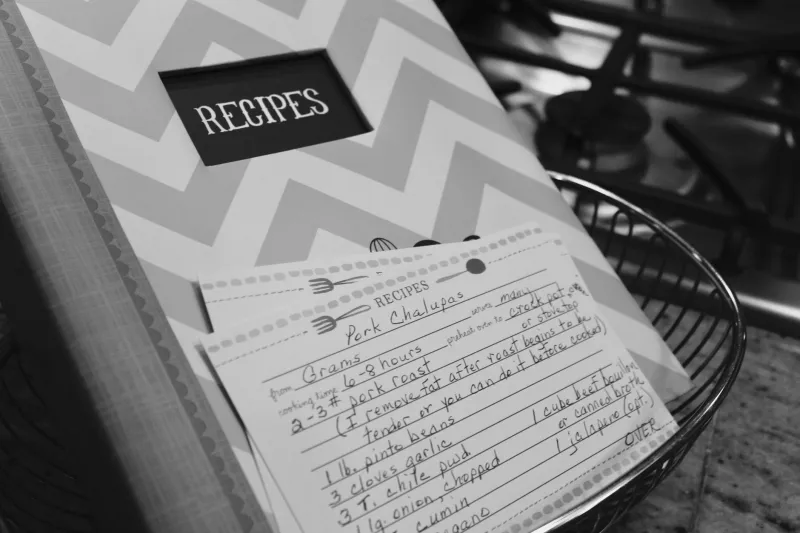
Include the recipe if it's something special. This is one of the most generous things a baker can do. Sharing a recipe alongside the baked good says: I want you to be able to have this whenever you want it, not just when I make it for you. It's an act of culinary generosity that turns a one-time gift into something lasting.
The Occasions That Call for This
People often think of baked gifts as a holiday-season thing, and sure — December is prime time for cookie tins and quick bread loaves. But some of the most meaningful baked gifts happen outside the expected calendar.
Showing up with a bundt cake after someone's surgery. Dropping off a batch of brownies when a friend is going through a rough patch. Bringing a loaf of good bread to a housewarming when everyone else brings wine. Leaving a box of muffins on a coworker's desk on their last day. These are the moments when a homemade baked good says exactly the right thing, and nothing else quite fills that role.
American food culture has always understood this on some level. The tradition of bringing food to someone's home during hard times is deeply embedded in how we take care of each other here. Baking for someone is just the most personal version of that impulse.
One Last Thing
If you've ever second-guessed whether a homemade gift was "enough" — whether you should have just bought something nicer, something more polished, something from a store — let that go.
What you made is already more than enough. You made it with your hands. You made it with your time. You made it with the specific person in mind, and they're going to feel that the moment they open it.
That's the whole point of baking with heart and sharing with love. Not perfection. Not presentation. Just the genuine, flour-dusted, slightly imperfect proof that someone was worth your time.
That's the most honest gift there is.